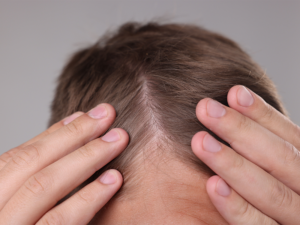
Hair restoration has changed dramatically over the past two decades. Results look more natural, recovery is faster, and the telltale signs of surgery that once made transplants so obvious are largely gone. Most of that progress traces back to one technique. When patients and surgeons talk about the benefits of Follicular Unit Extraction, they are describing exactly why modern hair transplants finally started producing hair that looks, grows, and feels like the real thing.
What Follicular Unit Extraction Is and How It Works
Follicular Unit Extraction, or FUE, is a hair transplant method in which individual follicular units are removed directly from the donor area of the scalp. A follicular unit is a naturally occurring cluster of one to four hairs. Rather than cutting a strip of skin, the surgeon uses a small precision punch tool to extract each unit one at a time, typically from the back and sides of the scalp where the follicles are genetically resistant to DHT, the hormone responsible for pattern hair loss.
Once extracted, the grafts are prepared and then placed into the thinning or balding areas. Each follicle is positioned to match the natural angle, direction, and spacing of your surrounding hair, so the result grows in seamlessly.
The technique began gaining serious clinical attention in the early 2000s. By the 2010s, it had become the most widely used approach in hair restoration worldwide. The reason was clear: FUE produced results that looked genuinely natural, without leaving a long linear scar across the back of the scalp. Once patients understood they could restore density without that visible trade-off, FUE became the clear preference for most candidates.
At Capilar Hair Center in Tijuana, the surgical team is led by Dr. Jorge Jimmy Cortez, a Certified Member of the International Society of Hair Restoration Surgery (ISHRS). The team uses both FUE transplant technique and Direct Hair Implantation (DHI) to deliver permanent, natural-looking results tailored to each patient’s scalp and goals.
Why FUE Became The Preferred Technique
Here are some of the benefits of Follicular Unit Extraction that make this technique the preferred choice for most patients today.
- No linear scar. FUE leaves only small, dot-like marks at each extraction site. These fade over time and remain hidden even under very short hair. There is no long scar running across the back of the scalp.
- Natural results. Grafts are placed individually, matched to your natural growth pattern. The transplanted hair grows in directions and angles that blend with the hair around it.
- Minimally invasive procedure. No strip of skin is removed, no stitches are needed, and the small extraction sites close on their own within days.
- Flexible donor harvesting. Because follicles are taken one at a time, the surgeon has precise control over which zones to draw from, protecting the overall look and density of the donor area.
- Permanent growth. The transplanted follicles are resistant to DHT, which means they continue growing long term, just as they did in the original donor site.
- Freedom with short hairstyles. Without a linear scar, you can wear your hair at any length, including closely shaved styles, without any visible signs of surgery.
These are the practical reasons the technique became the standard, and why it remains the first recommendation for most patients at CHC.

FUE Compared to FUT: What You Need to Know
To fully appreciate why FUE is now the preferred method, it helps to understand the technique it largely replaced. Follicular Unit Transplantation, or FUT, involves removing a strip of skin from the back of the scalp and dissecting it into individual grafts under a microscope. The approach can yield a high volume of grafts in a single session and still has a role in certain cases, but it comes with trade-offs that matter to most patients.
- Scarring. FUT leaves a single, linear scar where the strip was taken. FUE leaves only small, scattered dots that are much easier to conceal.
- Healing. FUT requires sutures and a longer recovery for the donor site. FUE extraction points close on their own with less discomfort.
- Hairstyle options. The linear scar from FUT limits how short you can cut your hair on the back and sides. FUE does not impose that restriction.
- Donor area control. FUE allows selective harvesting across different zones, giving the surgical team more flexibility to preserve donor density and aesthetics.
Your surgeon will assess which technique is appropriate for your specific case. The right choice depends on your goals, your degree of hair loss, and the overall health of your donor area.
Scar Camouflage: An Option for Past Transplant Patients
Not every hair transplant delivers the outcome a patient hoped for. Older strip procedures, or surgeries performed at clinics with lower standards, sometimes leave a wide or very visible linear scar. If you are self-conscious about a scar from a previous transplant, that situation is not necessarily permanent.
Capilar Hair Center offers scar camouflage hair transplant, a technique that involves placing follicular units directly into and around existing scar tissue. As those hairs grow in, they break up the visible line and help the scar blend with the surrounding hair. The process does not erase scars entirely in every case, but it can significantly reduce how noticeable they are.
Our hair restoration experts evaluate the scar tissue, assess blood supply in the area, and confirm whether follicles can successfully survive and grow there before making any recommendation. If you are a good candidate, this procedure can restore both coverage and confidence.
Is FUE the Right Technique for You?
The ideal age for hair transplant surgery is not fixed at a single number. It depends on when your hair loss has stabilized enough for surgery to produce consistent, lasting results, and the same logic applies to technique selection. Your candidacy for FUE rests on the health and density of your donor area, the pattern and stability of your hair loss, and what you are realistically hoping to achieve.
What you need first is an honest clinical assessment. The surgical team at Capilar Hair Center in Tijuana begins every case by identifying the root cause of your hair loss before recommending any procedure. From there, the team recommends whether FUE, DHI, or some non-surgical solution is the right path for your situation.
Your hair does not have to stay the way it is right now. Contact Capilar Hair Center and get the answers your case deserves from a qualified team of professionals who will tell you exactly what is possible. If this article is helping you, you can check out, How to remove scabs from hair transplant | Capilar Hair Center or High Density FUE For Advanced Baldness, A Different Approach.