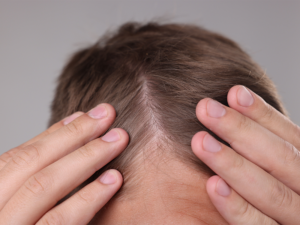
Losing your hair can feel like losing a piece of your identity, one strand at a time. For many people, the search for a real solution starts with a single question typed into a search bar late at night: is there a doctor who actually understands how to make hair look like hair again? At Capilar Hair Center in Tijuana, that question has a clear answer. The Dr. Jorge Jimmy Cortez hair transplant experience combines advanced surgical technique with an artist’s eye for natural design, giving patients from both sides of the border a reason to feel confident about their reflection again.
Dr. Cortez: A Trusted Name in Hair Restoration
Not every hair transplant produces the same result, and that gap almost always comes down to the surgeon behind the procedure. Dr. Jorge Jimmy Cortez has spent years focused specifically on hair restoration solutions, refining a technique that treats each graft as part of a larger visual composition. His background includes extensive training in follicular unit extraction and direct hair implantation, two of the most precise methods available in the field today, along with ongoing education in the evolving science of hair biology and scalp health.
What sets his approach apart is the attention paid to details that patients often don’t think to ask about: the angle at which each follicle is placed, the density distribution across the hairline, and the way hair naturally frames a person’s individual facial structure. These are the elements that separate a transplant that looks obviously “done” from one that simply looks like hair. Patients considering the clinic frequently mention that consultations feel unhurried and thorough, with realistic expectations set from the very first conversation rather than after the procedure is already underway.
FUE and DHI Hair Transplant Techniques
Two techniques dominate modern hair restoration, and understanding the difference helps explain why so many patients travel specifically for treatment at facilities like this one.
Follicular Unit Extraction, or FUE transplant technique, involves removing individual hair follicles one at a time from a donor area, typically the back or sides of the scalp where hair growth tends to be more resistant to hormonal thinning. Each follicle is extracted using a small, precise tool that leaves no linear scar, unlike older strip-harvesting methods. Once collected, the follicles are carefully implanted into the thinning or balding areas according to a design planned in advance with the patient.
Direct Hair Implantation, or DHI, follows a similar extraction process but changes how the grafts are placed. Instead of creating recipient sites first and inserting follicles afterward, DHI uses a specialized pen-like tool that allows the surgeon to implant each hair immediately after extraction, controlling depth, direction, and angle in a single motion. This can allow for tighter graft placement and, in skilled hands, an even more natural-looking finish, particularly along the hairline where subtlety matters most.
Both methods share key advantages over older surgical approaches: minimal scarring, a shorter recovery window, and results that hold up permanently once the transplanted follicles take root, since hair from the donor area is genetically resistant to the pattern baldness process. The choice between FUE and DHI often depends on the extent of hair loss, the characteristics of the patient’s hair, and the specific goals discussed during consultation.

Who Is a Good Candidate for Hair Transplant Surgery?
Not everyone experiencing hair thinning needs surgery immediately, and part of a responsible evaluation involves determining whether a transplant is truly the right next step. Generally, strong candidates have a stable donor area with enough healthy follicles to redistribute, along with a pattern of loss that has settled into a predictable shape rather than an active, rapidly progressing stage.
Men dealing with classic male pattern baldness along the crown or hairline are among the most common candidates, but hair restoration surgery isn’t limited to one demographic. Women experiencing diffuse thinning, individuals recovering from traction alopecia caused by tight hairstyles, and people who’ve experienced hair loss following an injury or surgical scar can often benefit as well, provided there is sufficient donor supply.
Age, general health, and the underlying cause of hair loss all factor into the evaluation. This is precisely why an in-person or virtual consultation matters so much before any commitment is made. A careful assessment of scalp laxity, follicle density, and hair caliber allows the surgical team to build a realistic plan rather than promising results that the biology simply can’t support.
Scar Camouflage: A Second Chance After FUT or Failed Procedures
Not every patient walking through the door is starting from a clean slate. A significant number of visitors to Capilar Hair Center have already undergone a previous procedure, often an older Follicular Unit Transplantation (FUT) surgery that left behind a visible linear scar across the back of the head. Others may have had an FUE procedure elsewhere that resulted in uneven density, an unnatural hairline, or noticeable scarring from inexperienced extraction.
Scar camouflage hair transplant addresses exactly this problem. Using precise follicular grafting, individual hairs are implanted directly into and around the scar tissue, breaking up the visible line and allowing hair to grow through it naturally. The goal isn’t to erase the scar entirely in a physical sense, but to make it functionally invisible under normal hair length and styling. For patients who’ve felt stuck avoiding short haircuts or certain angles in photos because of a scar from years ago, this option often represents a level of freedom they assumed was no longer available to them.
This service also reflects something important about evaluating a hair restoration provider: experience isn’t only measured by how many first-time transplants a clinic performs, but by its ability to correct and improve upon previous work, which requires an even deeper understanding of scalp anatomy and graft behavior.
Why Consulting a Hair Loss Specialist is a Game Changer
Hair loss can stem from a wide range of causes, including genetics, hormonal changes, nutritional deficiencies, stress, autoimmune conditions, and certain medications. Because the underlying trigger varies so much from person to person, jumping straight to surgery without a proper evaluation can mean missing a simpler, less invasive solution or, in some cases, undergoing a procedure that won’t hold up long term if the actual cause of the shedding isn’t addressed first.
A specialist experienced specifically in hair restoration, rather than a general practitioner, is trained to recognize the visual and diagnostic differences between conditions like androgenetic alopecia, alopecia areata, and telogen effluvium. That distinction directly shapes whether a transplant is appropriate, whether it should be paired with supportive treatments, or whether surgery should be delayed altogether until other factors are under control.
Choosing to work with a dedicated hair restoration clinic rather than a general cosmetic surgery provider often makes the difference between a transplant that ages well over decades and one that requires future correction. It’s a decision worth researching carefully, asking detailed questions, and reviewing real before-and-after results before moving forward.
To know more about Dr. Jorge Jimmy Cortez hair transplant, reach out to Capilar Hair Center today to schedule a consultation and get honest answers about what’s realistic for your specific case. The first step is simply starting the conversation.
If this article was helpful, you can explore other resources, such as, Ideal Age for Hair Transplant Surgery: What Matters Most or Choosing The Right Hair Transplant Clinic In Tijuana, Mexico.